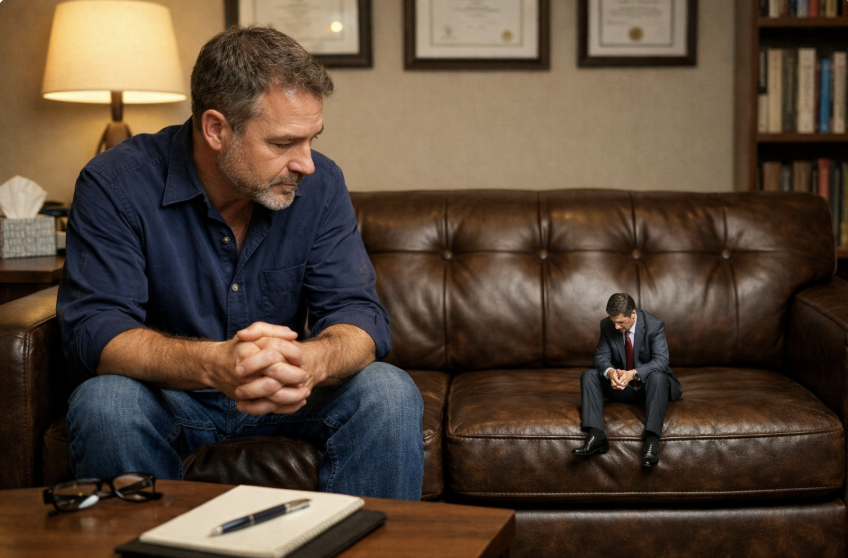

What residential trauma treatment is
Residential trauma treatment is a highly structured, live‑in level of care where you stay at a treatment center 24 hours a day for a set period of time. Instead of trying to manage PTSD, trauma, or severe anxiety on your own between appointments, you are immersed in a safe, contained environment that focuses on healing.
In a residential setting, you have:
- A consistent daily schedule
- Onsite clinical staff
- Structured therapy and skills training
- Space away from triggers, substances, and everyday pressures
For men, residential trauma treatment can be especially important. Many men are taught to shut down feelings, work through pain, or deal with intense stress alone. Over time this can show up as anger, emotional numbness, relationship conflict, addiction, or dangerous coping behaviors. In a men‑only residential setting, you can finally address that trauma without having to perform or explain what it is like to be a man in your world.
If you are already exploring options like trauma rehab, an anxiety treatment center, or inpatient PTSD treatment, residential trauma care is the level of support designed when symptoms are interfering with your ability to function, stay safe, or maintain responsibilities.
Signs you may need residential care
You do not need to wait until everything falls apart to consider a higher level of help. Residential trauma treatment is designed for high acuity, when symptoms are intense, complicated, or not responding to standard outpatient care.
You may benefit from stepping into a residential program if you notice some of the following:
PTSD and trauma symptoms feel unmanageable
You might be experiencing:
- Flashbacks or intrusive memories that stop you in your tracks
- Nightmares and sleep that never feels restful
- Sudden panic or dread in everyday situations
- Emotional numbing, feeling detached, or “not really here”
- Avoiding places, people, or conversations that remind you of past events
If these patterns are constant and disruptive, a short weekly session usually is not enough. Residential treatment gives you the time and space to stabilize and work through the root of those reactions.
Anger or emotional outbursts are escalating
For many men, anger is the only emotion that feels acceptable to show. Unresolved trauma often sits underneath:
- Explosive reactions to minor stress
- Verbal or physical aggression
- Road rage, bar fights, destroying property, or scaring people you care about
- Shutting down or stonewalling until you erupt
Residential trauma programs for men typically include focused anger management and emotional regulation training. This is not about taking away your strength or intensity. It is about giving you control over it so you are not held hostage by your own reactions.
Anxiety or hypervigilance is constantly “on”
If you are always on edge, scanning for threats, or struggling to relax, it can be more than general stress. Trauma related anxiety can look like:
- Racing thoughts that will not slow down
- Constant “what if” thinking
- Being easily startled or jumpy
- Needing to sit facing the door or checking exits
- Feeling physically exhausted from being tense all day
When anxiety reaches the point where you are missing work, withdrawing from people, or relying on substances to calm down, a residential setting gives you weeks of uninterrupted support to reset your nervous system.
Substance use or risky coping is getting worse
Alcohol, drugs, work, sex, gambling, or extreme risk taking can turn into ways of not feeling. If you are using any of these to manage trauma or anxiety, it is very hard to heal while you are still actively numbing.
Men who need both trauma and substance use support often do best in trauma‑informed residential care that can address both at the same time. If you are considering dedicated trauma rehab, a residential program that integrates both trauma therapy and addiction treatment may be the safest and most effective path.
Outpatient therapy has not been enough
You might already be in counseling and still feel stuck. Common signs you may need more than weekly sessions include:
- You make progress in therapy, then get overwhelmed between visits
- You keep canceling or no‑showing because you feel ashamed or exhausted
- You understand a lot of insight, but your behavior does not change
- Crisis spikes, self harm thoughts, or suicidal impulses keep coming back
Residential treatment gives you a fully structured environment, daily contact with your clinical team, and a contained space to do deeper work without needing to manage everything else at the same time.
What a men’s residential trauma program includes
Every center is different, but strong men’s residential trauma treatment programs tend to share several core components. These are designed to help you stabilize, understand what has happened to you, and start building long term resilience.
24/7 safety and medical support
When you enter residential care, safety comes first. You can expect:
- Continuous support from trained staff
- Medical and psychiatric evaluation
- Monitoring for withdrawal symptoms if substances are involved
- A predictable schedule that reduces chaos and uncertainty
If you are coming in for PTSD or severe anxiety, this level of structure helps your nervous system calm down. If you are entering from an inpatient PTSD treatment hospital stay or crisis unit, residential care can be the bridge that prevents you from slipping straight back into old patterns.
Trauma informed therapy
Trauma informed care recognizes that symptoms like anger, avoidance, or emotional shutdown often developed as survival strategies. Instead of asking, “What is wrong with you?” your treatment team asks, “What happened to you, and how did you learn to cope?”
You may work with approaches such as:
- Cognitive Behavioral Therapy to examine unhelpful beliefs you formed after trauma
- EMDR or other trauma processing models to help your brain “file” distressing memories
- Somatic or body based approaches that help you release stored tension and freeze responses
The goal is not to make you relive everything. It is to give you a safe, paced way to process what your body and mind have been carrying, and to build new, healthier responses.
Emotional regulation and anger management
A key focus in men’s trauma treatment is learning how to feel and manage emotions without being controlled by them. You may practice:
- Naming what you feel in real time rather than defaulting to “I’m fine” or “I’m pissed”
- Breathing and grounding techniques that lower the intensity of anger or panic
- Communication skills that help you set boundaries and ask for what you need
- Specific strategies to interrupt rage, impulsive decisions, or shutting down
Instead of hearing “calm down,” you learn what calming down actually involves and how to do it in your own body. Over time, you build the capacity to stay present in hard conversations, at work, and at home.
Skills for anxiety and PTSD symptoms
In residential care, you have daily opportunities to practice practical tools for trauma and anxiety symptoms, including:
- Managing flashbacks and intrusive images
- Handling triggers without bolting, freezing, or exploding
- Sleep routines and strategies for trauma related insomnia
- Reducing hypervigilance so you can move through life without constant threat scanning
These are not quick tips you read online. You practice them with support, in real time, while you are experiencing symptoms. That repetition helps your brain rewire, so the skills become automatic instead of something you have to remember after the fact.
Brotherhood based accountability and support
A men’s only residential environment offers something many men do not have: a group of peers who understand what it is like to carry trauma as a man. In this setting, “brotherhood” is not about tough talk. It is about honest accountability.
You have the chance to:
- Hear stories that sound like your own
- Be challenged when you fall into old patterns, excuses, or numbing
- Practice being honest about fear, grief, and shame in a room of men who get it
- Build friendships that are based on growth instead of avoidance
This type of camaraderie is a powerful antidote to isolation. Research on PTSD and peer support consistently shows that feeling understood and connected significantly improves outcomes and long term recovery [1].
When you are surrounded by other men doing the work, it becomes harder to hide and easier to change.
How the residential trauma treatment process works
Knowing what to expect can reduce some of the hesitation you might feel about entering a residential program. While every center has its own approach, the general flow often looks like this.
1. Assessment and admissions
The process begins with a detailed assessment. You talk with clinical and admissions staff about:
- Your trauma history and current symptoms
- Any recent crises, hospitalizations, or legal issues
- Substance use and medical concerns
- Medications you take and prior treatment experiences
- Your goals and fears about entering treatment
This information is used to determine if residential care is appropriate and safe for you. If you have been looking at specialized options like a PTSD treatment center or anxiety treatment center, this is where your team decides which focus you need most.
2. Personalized treatment planning
Once admitted, you receive an individualized plan. For men, a strong trauma plan typically includes:
- One to one therapy several times per week
- Group therapy with other men focused on trauma, anger, and relationships
- Psychiatric support and medication management when appropriate
- Structured activities, physical wellness, and mindfulness or grounding work
- Clear goals for emotional regulation, safety, and behavior change
You are not handed a generic schedule and told to “fit in.” The plan is shaped around your history, your current risks, and the specific ways trauma and anxiety affect your life.
3. Intensive daily programming
A typical day in residential trauma treatment might include:
- Morning check ins and planning for the day
- Psychoeducation about trauma, the brain, and anxiety
- Skills groups that focus on coping tools and relapse prevention if substances are involved
- Therapy groups that dig into trauma themes, masculinity, and relationships
- Individual sessions to process deeper material
- Evening activities, reflection, and down time
The structure can feel intense at first. Over time, it gives you a rhythm that replaces the chaos or numbness you may be used to. You are not left alone to manage symptoms between sessions. Your entire day is designed around healing and building capacity.
4. Family and relationship work
Even if your focus is on your own trauma, your relationships are part of your recovery. Many residential programs incorporate:
- Family therapy sessions in person or virtually
- Education for partners or loved ones about PTSD, trauma, and anxiety
- Boundaries work to address patterns of conflict, enabling, or withdrawal
You have an opportunity to repair trust, clarify expectations for aftercare, and help the people around you understand what you are working on. This is important for building a stable environment after you discharge.
5. Preparing for life after discharge
Residential trauma treatment is a powerful reset, but it is not the end of the journey. Before you leave, your team works with you on a detailed aftercare plan that can include:
- Stepping down to intensive outpatient or weekly therapy
- Continuing with a focused trauma rehab or PTSD treatment center program
- Ongoing psychiatry and medication support
- Peer support groups and alumni communities
- Safety plans for managing triggers and high risk situations
The goal is to help you carry what you have learned back into your real life so that progress holds, instead of dropping off once you are home.
Trauma focused therapies commonly used
You may already have some exposure to therapy and wonder what is different about trauma focused work in a residential setting. Several approaches are often combined for men with complex trauma and anxiety.
Cognitive Behavioral Therapy for trauma
CBT helps you identify how your thoughts, feelings, and behaviors connect. After trauma, men often develop beliefs like:
- “I should have done more”
- “If I let my guard down, something bad will happen”
- “I am dangerous to be around”
- “Real men do not ask for help”
In treatment, you examine these beliefs and test them against reality. Over time, you learn to replace them with more accurate, less punishing ways of thinking. CBT is also used to teach concrete coping skills and relapse prevention strategies if addiction is part of your story.
Exposure and processing approaches
Depending on your history and stability, you may work with structured trauma processing therapies such as:
- EMDR
- Prolonged Exposure
- Trauma focused CBT
These approaches help your brain fully process events that are stuck in “emergency mode.” With careful pacing and support, difficult memories lose some of their power. Instead of feeling hijacked by the past, you gain the ability to remember without reliving.
Somatic and body based work
Trauma is not just a story. It is also a set of responses wired into your nervous system. Body focused modalities are used to help with:
- Chronic muscle tension, pain, or digestive issues linked to stress
- Freeze responses where you feel detached or paralyzed
- Hyperarousal states like constant readiness to fight or run
Simple grounding, breath work, mindful movement, and other body based practices help you reconnect with your physical self in a safer way. Over time this reduces symptoms like hypervigilance and panic.
How long residential trauma treatment lasts
Length of stay depends on the severity and complexity of your situation. Some programs offer 30 day stays, while others recommend 45 to 90 days or longer for deep trauma work.
Factors that influence your time in care include:
- How long symptoms have been present
- Whether you have multiple traumas across your life
- Co occurring conditions like depression, bipolar disorder, or addiction
- Legal, occupational, or family stressors that add to your load
- How safe your home environment will be after treatment
Shorter stays can help with stabilization and immediate risk reduction. Longer stays offer more time to unravel patterns, practice skills, and solidify new behavior. From the start, you can talk with your treatment team about realistic expectations for time and progress so you are not guessing.
Questions to ask when choosing a men’s residential trauma program
Not every program that mentions trauma offers truly trauma informed, male focused care. As you evaluate options, it can help to ask direct questions such as:
- Do you specialize in trauma and PTSD, or is trauma one of many issues you treat
- How is your program tailored to men and male socialization
- What specific therapies do you use for PTSD and anxiety
- How do you integrate anger management and emotional regulation training
- Is there structured support for co occurring substance use if needed
- How do you handle safety concerns, including self harm or aggression
- What does an average day look like
- How do you involve families or partners
- What does your aftercare planning include
If you are already looking at an anxiety treatment center or a PTSD treatment center, make sure the program is comfortable addressing the kind of trauma you carry, whether it is combat, childhood abuse, accidents, medical trauma, or chronic stress and emotional neglect.
Taking the next step
If you recognize yourself in these descriptions, there is nothing weak about considering residential trauma treatment. It is a decision to step into a structured, accountable environment where your only job is to heal and rebuild.
You do not have to keep white knuckling your way through flashbacks, rage, or anxiety that will not let up. In a men’s only residential setting, you have the space, the tools, and the brotherhood to confront what you have been carrying and to learn a different way forward.
If you are ready to explore your options, starting a confidential conversation with a program that focuses on trauma, PTSD, and anxiety in men is a solid first move. You can ask questions, outline your situation, and decide, with clear information, whether now is the right time to step into residential care.