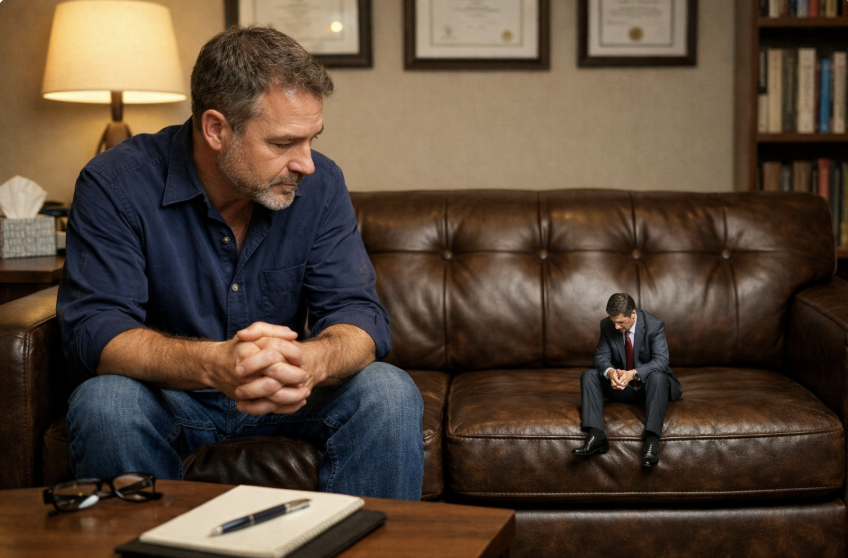

Why an anxiety treatment center can be life changing
If you live with severe anxiety, PTSD, or unresolved trauma, you may already know that willpower alone is not enough. When symptoms interfere with your work, relationships, or ability to feel safe in your own body, a structured anxiety treatment center can become the turning point.
In a men’s-only residential setting, you step out of survival mode and into a controlled environment that is built around stabilization, emotional regulation, and long-term resilience. Instead of facing panic, anger, or intrusive memories alone, you work with a trauma-informed team and a small community of men who understand what it means to feel overwhelmed but still want to get better.
A dedicated anxiety treatment center offers more than symptom relief. It gives you time, space, and expert guidance to rebuild how you think, feel, and respond to stress so you can return home with tools that actually work in real life.
When inpatient anxiety and trauma care is needed
Outpatient therapy and medication can be helpful, but they may not be enough if your symptoms are intense or constant. Inpatient or residential care becomes important when anxiety and trauma start to control the decisions you make every day.
You may benefit from a structured anxiety treatment center if you notice any of the following:
- Panic attacks, flashbacks, or surges of anger that feel impossible to control
- Hypervigilance, constant scanning for danger, or feeling “on guard” all the time
- Avoiding work, social situations, or family responsibilities because of fear or shame
- Using alcohol, drugs, or risky behaviors to numb anxiety or trauma memories
- Sleep that is broken by nightmares, early waking, or an inability to fall asleep
- Thoughts that life would be easier if you did not wake up tomorrow
- Failed attempts at outpatient therapy or short-term programs that did not address the root causes
In a residential setting, every part of your day is designed to reduce chaos and increase safety. That consistent structure is what allows your nervous system to finally settle enough for real trauma work to begin. If you are managing PTSD along with anxiety, specialized options like inpatient ptsd treatment or a focused ptsd treatment center can be especially important.
What you experience in a men’s-only treatment environment
Many men carry the message that they need to handle everything alone. In a men’s-only anxiety treatment center, you are in a space where you do not have to perform or hold everything together. You are surrounded by peers facing similar issues, guided by clinicians who understand how male socialization, pride, and shame can complicate recovery.
Safety and structure from day one
From the moment you arrive, your daily schedule is shaped for stabilization. A typical day may include:
- Morning check-ins to assess mood, sleep, and any overnight triggers
- Individual therapy focused on anxiety, trauma, and your specific history
- Skills groups that teach you practical tools for calming your mind and body
- Physical movement, nutrition support, and time outdoors
- Evening reflection or peer support to reinforce what you learned that day
Predictable routines reduce uncertainty, which is a common driver of anxiety. Over time, your brain and body begin to trust that you are safe enough to explore the experiences that have been buried or avoided.
Brotherhood-based accountability
In a men’s-only setting, you are not just a patient on a list. You are part of a small community where honesty is expected and avoidance is gently but firmly challenged. When you commit to a goal, other men notice whether you follow through.
Brotherhood-based accountability matters because:
- You are more likely to push through discomfort when you know others are doing the same
- You see your own patterns more clearly when they show up in group interactions
- You experience what it is like to be fully seen, without judgment, and still accepted
This is not about competition. It is about standing next to other men who are also tired of running from their past, and holding each other to a higher standard of honesty and growth.
Trauma-informed therapy tailored to men
Anxiety is often rooted in unresolved trauma, whether that trauma is obvious and intensively life threatening or more hidden and chronic. A trauma-informed anxiety treatment center recognizes that your symptoms are not random. They are logical responses to what you have lived through, even if those responses no longer serve you.
Understanding trauma and your nervous system
Trauma changes how your brain and body interpret safety and danger. You may react to a raised voice, a closed door, or a sudden noise as if your life is at risk, even when you know logically that you are not in danger.
Trauma-informed care helps you understand:
- Why you might shut down, detach, or feel numb in stressful situations
- Why anger or aggression can appear suddenly when you feel cornered
- Why you struggle to trust, even with people who care about you
By normalizing these reactions and explaining what is happening in your nervous system, your team helps reduce shame and open the door to meaningful change. For some men, this may include a focused path within a trauma rehab or residential trauma treatment program.
Evidence-based therapies that target anxiety and trauma
A high-quality anxiety treatment center will draw from evidence-based approaches that are specifically effective for anxiety, PTSD, and trauma related disorders. Your plan may include methods such as:
- Cognitive behavioral therapy to identify the beliefs and thought patterns that amplify fear, self-criticism, or worst-case thinking
- Exposure-based strategies to gradually face situations you have been avoiding, at a pace that feels challenging but safe
- Trauma-focused modalities that help you process memories instead of reliving them repeatedly
- Mindfulness-based practices that train your attention to return to the present instead of spinning into “what if” scenarios
These therapies are not one-size-fits-all. Your team adapts them to your history, your triggers, and your personality so you are working with methods that fit you, not forcing yourself into a rigid protocol.
Building emotional regulation and anger management skills
If you live with severe anxiety or trauma, your emotional reactions may feel unpredictable or extreme. You might find yourself going from zero to one hundred in seconds, or shutting down completely in conflict. In residential care, emotional regulation becomes a daily practice, not an abstract idea.
Learning to recognize early signs
The first step in regulating emotion is learning to notice your internal signals before you hit the point of no return. You practice paying attention to:
- Physical cues, such as tightness in your chest or jaw, a racing heart, or shallow breathing
- Mental cues, such as catastrophizing, black and white thinking, or replaying old situations
- Behavioral cues, such as pacing, withdrawing, or reaching for a substance or device
As you track these signs in real time, you begin to interrupt old cycles before they fully escalate.
Practical tools for staying grounded
Once you can see your patterns, staff teach and rehearse specific strategies with you, including:
- Breathing and grounding techniques to calm the body when anxiety spikes
- Short, structured time outs to prevent arguments from turning into explosions
- Communication tools to state what you feel and need without attacking or shutting down
- Replacement behaviors so you have something to do instead of defaulting to anger, avoidance, or numbing
These skills are practiced again and again, both in one-on-one sessions and in group interactions. The goal is not perfection. The goal is to reduce the intensity and duration of emotional spikes and to recover more quickly when they happen.
Addressing anger without shame
Many men are more comfortable identifying as “angry” than “anxious” or “afraid.” In a men’s-only setting, you have room to explore anger without being labeled or dismissed. You work to understand:
- What your anger is trying to protect
- How earlier experiences shaped your reactions
- How to hold boundaries firmly without crossing the line into aggression
Instead of trying to eliminate anger, you learn to use it as information, then respond in ways that are consistent with the man you want to be.
Medication, physical wellness, and nervous system reset
Anxiety and trauma are not only psychological. They affect sleep, digestion, energy, and even your immune system. A comprehensive anxiety treatment center helps you address the physical side of recovery alongside therapy.
You may receive:
- Careful evaluation of current medications and, when appropriate, adjustments to better target anxiety, panic, or insomnia
- Support during any necessary detox or taper from substances you have used to self-medicate
- Nutrition planning to stabilize blood sugar and reduce physical states that mimic anxiety
- Exercise and movement that match your current capacity and slowly build strength and confidence
Attending to your physical health is not secondary. It is part of retraining your nervous system to recognize safety and to function without constant alarm.
How residential immersion supports long-term resilience
The goal of residential anxiety treatment is not just to feel better inside the program. It is to prepare you to live differently once you step back into work, family, and daily stress. That is why discharge planning begins early and remains a central part of your experience.
During your stay you work with your team to:
- Identify the specific situations at home or work that are most likely to trigger setbacks
- Develop clear coping plans and routines that you can realistically maintain outside the center
- Practice skills in progressively more challenging situations, so they become automatic instead of theoretical
- Build a support network that may include peers from the program, community groups, or ongoing therapists
You also explore what a meaningful life in recovery looks like for you personally. That may involve repairing relationships, changing career paths, setting healthier boundaries, or simply learning how to experience calm without feeling the urge to stir up chaos.
Residential treatment is not about removing all stress. It is about giving you the capacity to meet stress without collapsing or exploding, and to return to balance more quickly when life is hard.
By the time you complete the program, you leave with a concrete plan, measurable tools, and a clearer sense of who you are apart from anxiety and trauma.
Taking the next step toward change
If anxiety, PTSD, or unresolved trauma are shaping your decisions, your relationships, and your future, you do not have to keep fighting alone. A specialized anxiety treatment center for men offers a safe, structured environment where you can step out of crisis mode, understand what is happening inside you, and practice new ways of living with intensive support.
Reaching out for help is not a sign that you are weak or broken. It is a choice to stop letting symptoms control your life and to put yourself in a setting where healing is possible. With trauma-informed therapy, emotional regulation training, anger management support, and brotherhood-based accountability, you give yourself a real opportunity to rebuild your life on a stronger foundation.