

Equine-Assisted Therapeutic Work in Men’s Residential Treatment
Equine-assisted therapy has become an increasingly respected component of residential behavioral health treatment because horses respond directly to emotional presence rather than verbal explanation. Unlike people, horses do not respond to status, persuasion, or intellectual reasoning. They respond to congruence.
If a man approaches a horse with agitation, impatience, or internal tension, the horse reacts accordingly. If he approaches with calm focus and emotional regulation, the interaction changes immediately. This dynamic creates powerful real-time feedback that cannot be replicated in conversation alone.
For many men who have spent years managing perception or controlling situations through words, this experience can be both confronting and illuminating.
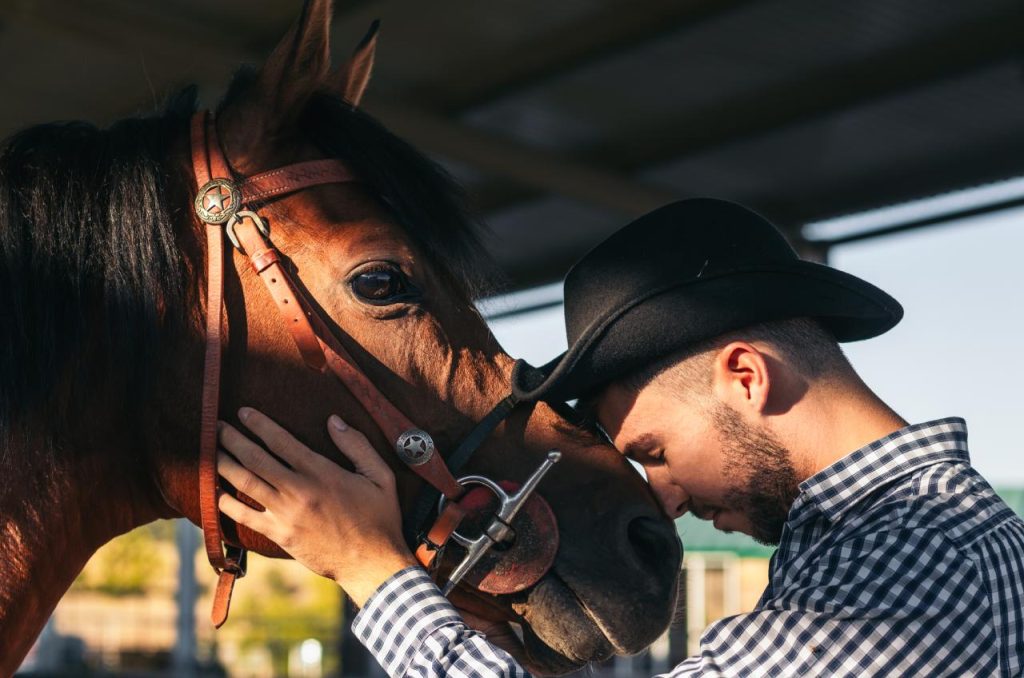
In traditional therapy settings, emotional patterns are often discussed after they occur. A client may reflect on a conflict, a relapse trigger, or a defensive reaction long after the moment has passed.
Equine-assisted therapy allows these patterns to appear in real time.
While interacting with horses, men may quickly observe how frustration, impatience, control, avoidance, or fear influence the interaction. When a horse refuses to cooperate, it becomes an opportunity to examine emotional response rather than force compliance.
These moments are processed clinically with trained staff who help clients translate the experience into insight about their behavior in relationships, work, and recovery.
Many men entering treatment struggle with emotional regulation. Anger may surface quickly. Anxiety may drive impulsive behavior. Frustration tolerance may be limited.
Working with horses requires calm presence and patience. Horses respond to subtle changes in posture, tone, and movement. A client who becomes reactive will see the effect immediately.
Through repeated interaction, men begin to understand how their internal state affects the environment around them. Learning to regulate emotional responses in this setting builds skills that carry into family relationships, professional environments, and recovery.
One of the most important lessons in equine-assisted therapy involves the difference between leadership and control. Many men attempt to manage outcomes through force, persuasion, or authority. Horses do not respond well to those approaches.
Instead, they respond to consistency, clarity, and calm direction.
This experience often reveals how leadership grounded in presence and self-regulation produces better outcomes than control driven by frustration or ego. For men who occupy leadership roles professionally, these lessons can be particularly powerful.
Equine integration at Rippling Waters is not recreational horseback riding. It is a structured therapeutic component supervised by trained professionals and integrated into the clinical program.
Sessions are designed to support broader treatment goals such as emotional regulation, accountability, communication, and self-awareness. Each experience is followed by guided reflection to help clients understand what occurred and how it relates to their personal patterns.
This structure ensures that experiential work supports the deeper psychological work occurring throughout treatment.
Equine-assisted therapy works alongside the broader therapeutic model at Rippling Waters, which includes individual therapy, group therapy, trauma-informed care, and evidence-based clinical modalities.
Together, these approaches create a comprehensive recovery environment where insight is not only discussed but practiced. When men learn to regulate themselves emotionally in real situations, change becomes more durable.
This integration of clinical work and experiential learning helps transform awareness into lasting behavioral change.
Rippling Waters is a private-pay residential program serving men primarily from the Northeast, with national admissions available. Our admissions process is confidential, structured, and direct.