
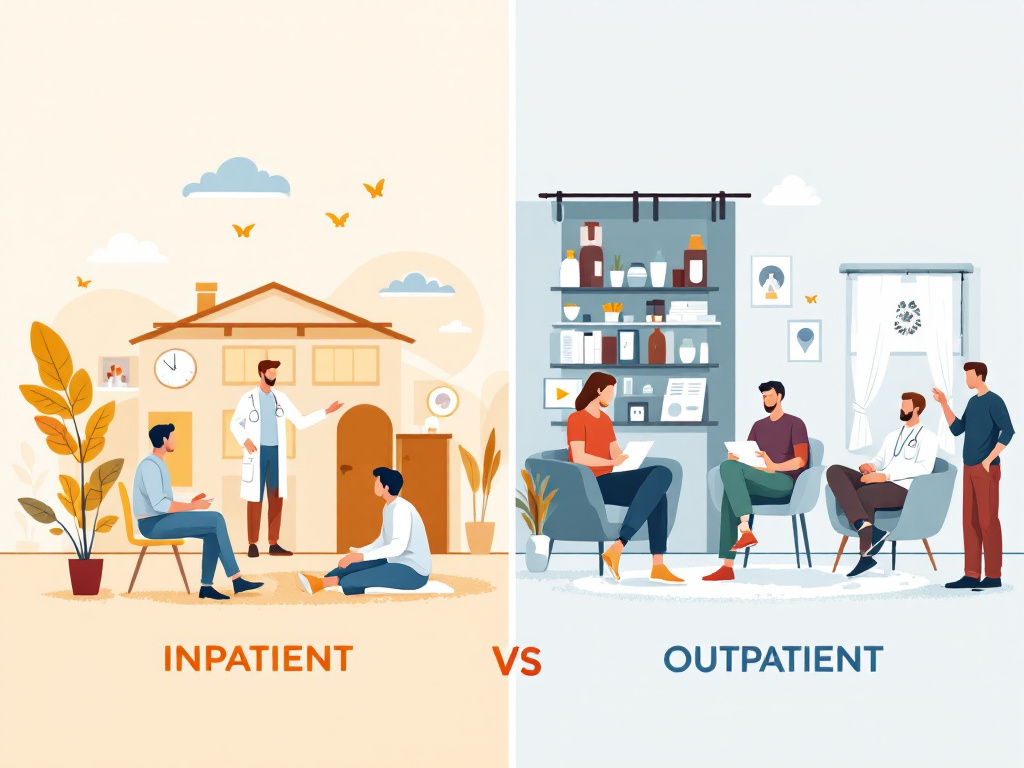
Understanding inpatient vs outpatient alcohol rehab
When you start comparing inpatient vs outpatient alcohol rehab, you are really asking two core questions. How much structure and support do you need right now, and how much change are you ready to make in your daily life to protect your sobriety.
Both levels of care can be effective for alcohol use disorder. The right fit depends on your history with drinking, your mental health, your environment at home, and how many times you have tried to quit before. As a man, you also carry specific pressures around work, family, and what it means to be strong, which can influence which setting will actually set you up for success.
Before you decide, it helps to understand what each option actually looks like day to day, what you can expect from detox, how long you might be in treatment, and how each level of care supports long term relapse prevention.
What inpatient alcohol rehab involves
Inpatient alcohol rehab means you live at the facility for a set period of time. Your daily schedule, your environment, and your access to alcohol are all tightly controlled to help you stabilize and focus on recovery.
Structure and daily schedule
In a men’s residential setting, your days are usually highly structured. You wake up at a set time, follow a schedule of groups and individual sessions, and have specific times for meals, recreation, and personal reflection.
You can expect a mix of:
- Individual therapy focused on your history, triggers, and goals
- Group therapy with other men who understand your pressures and experiences
- Education about addiction, relapse, and coping skills
- Holistic or experiential activities such as exercise, mindfulness, or outdoor time
This structure is not about control for its own sake. It is designed to interrupt the chaos of alcohol use and give your brain and body space to reset. For men who feel stuck in a cycle of white knuckling, binging, apologizing, then repeating, this reset can be especially important.
24/7 support and safety
One of the biggest differences between inpatient vs outpatient alcohol rehab is the level of supervision. Inpatient care provides around the clock support and monitoring.
If you experience:
- Strong cravings
- Mood swings or emotional outbursts
- Sleep problems
- Anxiety, depression, or anger
there are staff available to help you regulate and stay on track. You are not trying to hold everything together alone while still going to work, managing family conflict, or dealing with social pressure.
For men who have access to alcohol at home or friends who still drink heavily, this level of separation can be critical. You remove yourself from your usual environment long enough to build new habits and perspectives.
Men’s only environment and identity work
In a men’s only inpatient program, you are surrounded by peers wrestling with similar questions about masculinity, responsibility, and identity. This setting makes it easier to talk honestly about shame, failed attempts to quit, and the fear of being seen as weak.
You have space to explore:
- What “being a man” has meant in your family or culture
- How work stress, success, or failure connects to your drinking
- The impact of alcohol on your role as a partner, father, or provider
- The way you handle anger, disappointment, and vulnerability
A structured, male focused environment gives you room to rebuild your identity around integrity and accountability, not alcohol.
What outpatient alcohol rehab involves
Outpatient alcohol rehab lets you live at home and attend treatment several times a week. You keep more of your usual responsibilities, which can be either an advantage or a risk, depending on your situation.
Different levels of outpatient care
Outpatient treatment is not one thing. There are different levels of intensity, including:
- Partial hospitalization programs (PHP), which can run most of the day, several days per week
- Intensive outpatient programs (IOP), often 3 to 5 days per week for several hours
- Standard outpatient, typically 1 to 3 sessions per week
The higher intensity programs can look similar to inpatient in terms of therapy hours, but you still go home at night. That means you are managing cravings, triggers, and relationships in your everyday environment while actively in treatment.
Flexibility and real world practice
If you have stable housing, reliable support, and a safe distance from alcohol, outpatient care gives you the chance to immediately apply what you learn in therapy to your daily life.
You can:
- Practice refusal skills with coworkers or friends who still drink
- Work on communication with a partner or family
- Navigate work stress or parenting without alcohol
- Adjust your routines and social life while discussing challenges in group
For men who cannot step away completely from work or family obligations, this flexibility can make treatment possible. It does, however, require a higher level of self monitoring and honesty about how you are coping between sessions.
Limits of outpatient support
The same flexibility that makes outpatient attractive can also be its main limitation. If you are in denial about how serious your drinking is, or if you have a pattern of minimizing your symptoms, you may under report what is happening at home.
Outpatient care might not provide enough containment if:
- You drink heavily at night after sessions
- Your home or social environment is saturated with alcohol
- You have a history of withdrawal complications or seizures
- You often give in to peer pressure or feel unable to set boundaries
In these situations, you are asking yourself to maintain control in exactly the environment that has kept you stuck.
Detox expectations in each setting
If you have been drinking heavily or for a long time, you likely need medical detox before you can fully participate in treatment. Detox is the process of safely clearing alcohol from your system and managing withdrawal symptoms.
You can learn more about timelines in the dedicated resources on what to expect in alcohol detox and the alcohol detox timeline, but it is important to understand how detox connects to the inpatient vs outpatient decision.
Medical supervision and safety
Alcohol withdrawal can be dangerous and, in some cases, life threatening. Symptoms can include:
- Tremors, sweating, or nausea
- Anxiety, irritability, or agitation
- Elevated heart rate or blood pressure
- Hallucinations or seizures in severe cases
Inpatient settings usually include or coordinate closely with medically supervised detox. You are monitored regularly, and medications can be used to reduce risks and help you feel more comfortable.
Some outpatient programs also support ambulatory detox for lower risk cases, but you are not under constant observation. If your symptoms worsen at night or you do not have someone reliable at home, this can put you at risk.
Transition from detox to treatment
Detox is only the first stage. It clears your body of alcohol, but it does not teach you how to live differently. In inpatient rehab, the transition from detox into structured programming tends to be smoother, since you stay in the same environment and begin therapy as soon as you are medically stable.
In outpatient care, there is usually a gap between detox and starting your program, or you may be trying to begin outpatient therapy while still experiencing withdrawal related fatigue or mood changes. For many men, this makes it harder to fully engage in the emotional and behavioral work.
If you are unsure whether you even need detox, reviewing the signs you need alcohol rehab and talking honestly with a clinical team can help you clarify the safest starting point.
Comparing benefits and drawbacks for men
Both inpatient and outpatient alcohol rehab have clear advantages. The question is not which is “better” in general, but which is better for you at this point in your recovery.
Here is a concise comparison:
| Aspect | Inpatient alcohol rehab | Outpatient alcohol rehab |
|---|---|---|
| Structure | Highly structured days, limited freedom to use | Some structure, more personal responsibility |
| Environment | Alcohol free, controlled, separate from triggers | You remain in your usual environment |
| Support | 24/7 staff and peer support | Support during sessions only |
| Work / family | Requires time away from routine roles | Allows you to keep many obligations |
| Cost | Typically higher overall cost | Often lower cost |
| Best when | You have high risk, unstable environment, or repeated relapse | You have stability, support, and milder symptoms |
If you have tried outpatient programs or self guided attempts in the past and found yourself drinking again, it may be a sign that you need the intensity and containment of a residential setting.
How long treatment usually lasts
You may be wondering not only what level of care you need, but also how long alcohol rehab is. Length of stay is influenced by your history, your progress, and the specific program you choose.
Typical inpatient timelines
Many inpatient or residential alcohol programs for men last between 30 and 90 days. In a men’s focused environment with strong clinical structure, a 45 to 60 day stay is common. This gives you time to:
- Stabilize physically and emotionally after detox
- Develop insight into patterns and triggers
- Practice new coping skills within a controlled setting
- Begin rebuilding your identity and long term plan
Leaving too quickly can undermine your progress, especially if you have been drinking for many years or have significant co occurring mental health symptoms.
Typical outpatient timelines
Intensive outpatient programs usually run for 8 to 12 weeks, sometimes longer. Standard outpatient can continue for several months or more, depending on your goals and risk factors.
The key is consistency. Sporadic attendance or constant schedule changes reduce the benefits. If your life makes it difficult to show up reliably, that is another signal to consider whether inpatient might offer a better container for the early stages of recovery.
Relapse prevention and long term success
Regardless of which path you choose, protecting your sobriety over time requires a clear relapse prevention plan. Asking “is alcohol rehab effective” is really asking whether you will have enough support and structure to maintain the changes you make.
Building a relapse prevention plan
Effective programs help you identify your unique warning signs and high risk situations. In a men’s only environment, that might include:
- Work events or business travel where alcohol is normalized
- Peer groups that celebrate drinking as a symbol of success or toughness
- Relationship conflict that triggers anger, shame, or withdrawal
- Loneliness after divorce, separation, or kids leaving home
A good alcohol relapse prevention program focuses on specific, realistic strategies rather than general advice. You work on concrete plans for what you will do, who you will call, and how you will respond when those situations come up.
Step down and aftercare
Many men benefit from moving through levels of care rather than making an abrupt jump from high structure to total independence. For example, you might:
- Complete an inpatient stay focused on stabilization and intensive work
- Step down to intensive outpatient while living in sober housing
- Transition into standard outpatient, peer support groups, or individual counseling
This stepwise approach gives you time to test your skills in the real world while still having a clinical safety net. It also reinforces the idea that recovery is a long term process, not a quick fix.
How to decide which level of care you need
You might recognize that you have a problem with alcohol but still question when to go to alcohol rehab or which level of care is appropriate. An honest self assessment can give you useful information before you talk with an admissions team.
Questions to ask yourself
Consider these questions and answer them as directly as you can:
- Have you tried to quit or cut down before, and what happened
- Do you experience withdrawal symptoms when you stop drinking
- Have you had medical issues, blackouts, or accidents related to alcohol
- How much access do you have to alcohol at home or work
- Are the people closest to you supportive of your sobriety or still drinking heavily
- Do you struggle with depression, anxiety, trauma, or anger that gets worse when you stop
If your honest answers point toward high risk, repeated failed attempts, or an unsafe environment, inpatient is likely to serve you better, at least in the beginning.
Clinical assessment and recommendation
Ultimately, a professional evaluation is the most reliable way to decide between inpatient vs outpatient alcohol rehab. A clinical team will look at:
- Your drinking history and pattern
- Past treatment attempts
- Medical and psychiatric history
- Current living situation and support system
From there, they can explain how alcohol rehab works at each level of care and help you understand what a realistic plan looks like for you, not just in theory, but in your actual life.
Choosing a men’s only, structured environment
If you are an adult man who has cycled through attempts to quit, minimized your symptoms, or hidden your drinking to protect your image, a men’s only, structured inpatient program may offer what you have not had before. A clear schedule, clinical sophistication, accountability, and a community of men who are also rebuilding their identities.
You are not just choosing where to sleep for a few weeks. You are choosing the environment that will shape your early recovery, your mindset, and the foundation you build for the next chapter of your life.
Taking the step to reach out, ask questions, and allow yourself to be honest about what you need is part of the work. Whether you begin with inpatient or outpatient care, what matters most is that you do not keep trying to solve this alone.