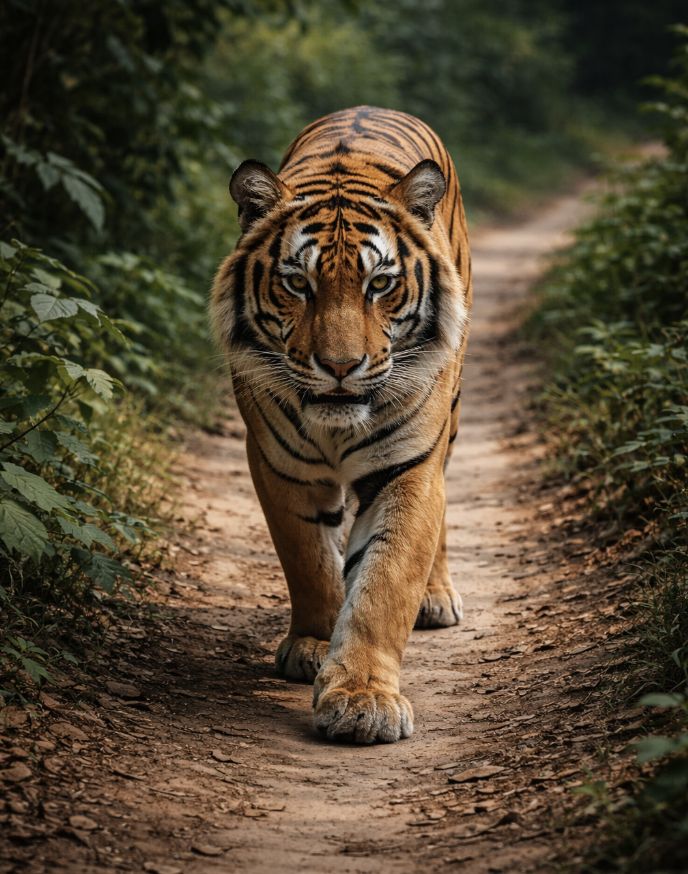
They found the tiger pacing in front of a motorcycle repair shop in a crowded Indian town. For over a decade, he had lived tethered to a steel post by a 15-foot chain. He could not roam, could not hunt, could not lie beneath trees or chase the wind. He was full-grown, magnificent in muscle and size, but his body betrayed the years. His stripes were dulled, his fur matted in places from the rubbing of chains.
He could only pace. Back and forth. Back and forth. The shop owner said the tiger had been brought there as a cub. Now a roadside attraction. The tiger brought customers. Children posed near him. Tourists tossed scraps. He had been chained since his teeth first came in. And over time, something strange happened. The tiger stopped pulling at the chain. Stopped fighting. Instead, he wore a path, a thirty-foot stretch of compacted dirt between two invisible lines. Day after day, hour after hour, he paced the same distance. Forward. Turn. Back again.
When animal activists finally secured his release, there was a celebration. News cameras arrived. The sanctuary prepared a lush enclosure, a man-made paradise of trees and sunlight and open space. On the day of his release, the gate swung open. The tiger stepped out… and found a stretch of land that felt familiar. About thirty feet wide.
And that is where he stayed. Not for a day. Not for a week. But for the rest of his life. He never ran the fields. Never explored the trees. Never climbed the rocks or touched the far corners of the place meant to restore him. He paced. Thirty feet. Because the chain was gone, but the cage had moved inside him.
What It Means
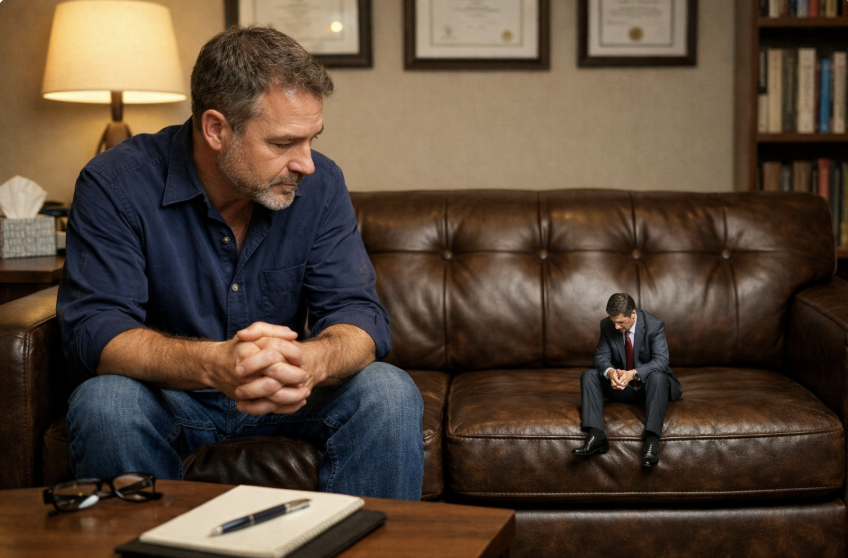
The tiger is real. But so is the metaphor. Many of us carry cages we can’t see, they are not built of bars, but of anger, repetition, guilt, shame, trauma, or someone else’s rules. We stay within the boundaries we were taught to believe in, even long after we’re free to go. Self-limiting beliefs are powerful because they don’t need to be enforced. They just need to be repeated, just enough times that you begin to believe the gate is still locked.
Maybe someone told you that you weren’t smart enough or strong enough. That you’d always be angry. That men like you don’t change. Maybe life taught you that trying only brings disappointment. That taking risks hurts. That hope is dangerous. That the damage in your past had already sealed your future. Maybe they didn’t have to say it outright. Maybe they just ignored you, laughed at you, compared you to someone else, until you started to believe the silence more than their words. So now, you pace between invisible lines, not because you’re weak, but because the lines feel real.
Maybe life taught you that every time you reach out, something gets taken away. That it’s safer to expect nothing than to risk losing everything. Maybe hope started to feel like a trick, an invitation to get hurt again. Because somewhere deep down, you started to believe this is what life is, thirty feet of safe, predictable, repeatable pain.
But it’s not. It never was. You are not your upbringing. You are not your trauma. You are not the pattern you were forced to live inside. And you are not the chain you learned to stop pulling against.
Freedom isn’t just about cutting ties. It’s about healing the part of you that stopped trying. It’s about reaching for something you’ve never held, and believing you’re allowed to have it. Some of the hardest work a man will ever do is not in breaking free. It’s in believing he’s already free and walking like he is free, when the ground beneath him feels unfamiliar.
You’re encouraged to step beyond the path. Touch the edge. Test the soil. Let the wind hit your face like it never has before. Run where the cage once stood. Because it’s not there anymore.
Because the world is wider than you think, and you were meant for more than pacing.