
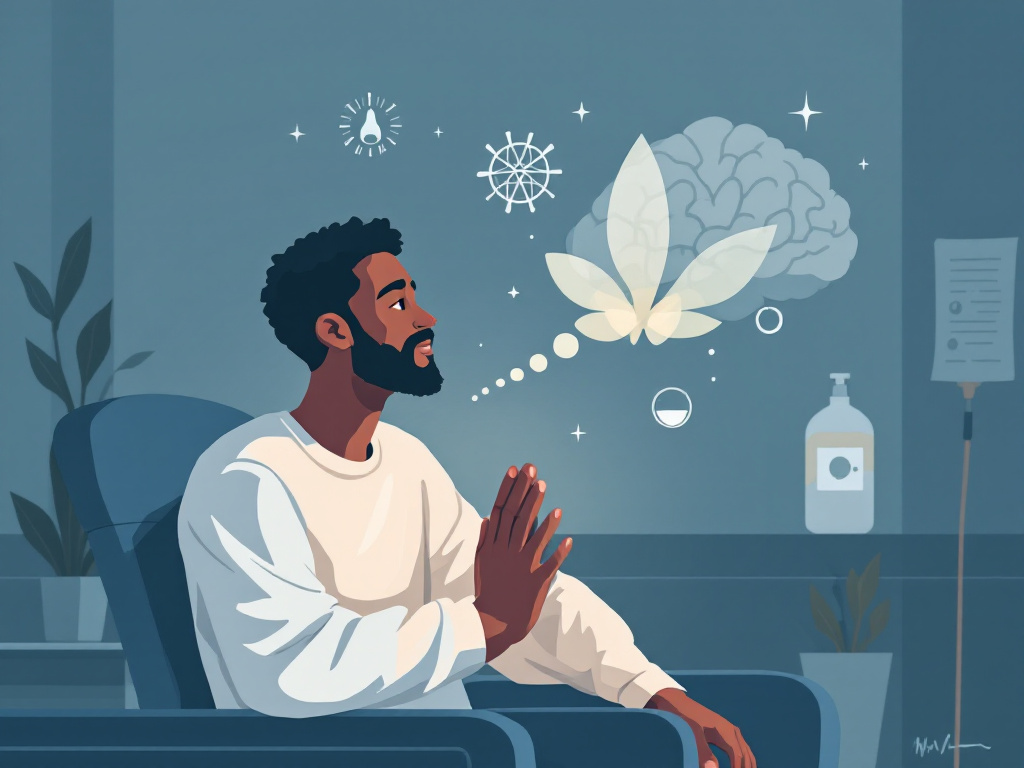
Understanding dual diagnosis and why it matters
If you live with both depression and addiction, you are not just “struggling more than most.” You may be facing a dual diagnosis, which means you have both a mental health disorder and a substance use disorder at the same time. Each condition fuels the other, so your symptoms are often more intense and harder to manage on your own.
According to the Cleveland Clinic, dual diagnosis occurs when a mental health disorder, such as depression, anxiety, bipolar disorder or ADHD, is present alongside a substance use disorder, and each problem makes the other worse over time [1]. This is not rare or unusual. The National Alliance on Mental Illness notes that among the 21 million people in the U.S. with a substance use disorder, about 8 million also live with a mental illness [2].
If outpatient therapy, medication or standard rehab have not been enough, recognizing the signs you need dual diagnosis treatment can be the turning point. When your symptoms reach a certain level, integrated inpatient psychiatric care is often the safest and most effective next step, especially for men who may be used to hiding pain or “toughing it out.”
How depression and addiction interact
Depression and addiction often lock you into a cycle that is very hard to break alone. You may use alcohol or drugs to get relief from sadness, hopelessness, or anxiety. At first it can feel like a solution. Over time, it becomes another problem that deepens your depression and leaves you feeling more stuck.
NAMI reports that adults with mental illness are about twice as likely to develop substance use disorders, often due to attempts to self medicate difficult emotions or distressing thoughts [2]. When you add in work stress, family pressure, and expectations about what it means to “be a man,” using substances can start to feel like the only way you know to cope.
If you are wondering where this connection comes from, explore questions such as can depression cause addiction. Understanding the link can help you see why treating only one problem at a time usually is not enough.
In a dual diagnosis situation, you might notice patterns like:
- Drinking or using more whenever your mood drops
- Crashing into deeper depression after a binge
- Losing interest in sobriety because life still feels empty or painful
- Stopping your psychiatric medications because you are using, or using more because your medications do not seem to help
When this cycle continues, you need a treatment approach that addresses both conditions at once, not in separate silos and not in short, disconnected outpatient appointments.
What dual diagnosis treatment actually is
Dual diagnosis treatment is a coordinated approach that treats your mental health disorder and your substance use disorder together. Instead of sending you to one provider for addiction and another for depression, an integrated program builds one plan that covers both.
Cleveland Clinic explains that dual diagnosis care usually involves behavioral therapies, medications when appropriate, support groups and sometimes inpatient care if you need 24 hour monitoring or medical stabilization [1]. NAMI emphasizes that effective care must be integrated, not “sequential,” which means you no longer have to get sober first and only then treat your mental health condition [2].
If you are just starting your research, it can help to review what is dual diagnosis treatment. This gives you a clearer picture of how a coordinated team works together for you.
How an integrated mental health and addiction program works
In a high quality mental health and addiction program, you can generally expect:
- Comprehensive assessment by clinicians who specialize in both mental health and substance use
- A unified treatment plan that addresses mood, thinking patterns, behaviors and physical health
- Evidence based therapies like cognitive behavioral therapy and other structured approaches
- Medication management for depression, anxiety, bipolar disorder or ADHD, alongside relapse prevention
- Group work that focuses on both emotional health and sobriety skills
- Family or relationship involvement when appropriate, so your support system can understand what you are facing
The National Institute of Mental Health stresses that accurate diagnosis by providers experienced in both areas is essential, because symptoms of depression, anxiety or bipolar disorder can look very similar to substance related changes, and you need the right diagnosis to receive effective care [3].
Why inpatient dual diagnosis treatment is sometimes necessary
Outpatient treatment can work well when your symptoms are mild to moderate and your daily life is relatively stable. However, there are times when your safety, functioning, or home environment make it very difficult to heal while staying where you are.
Cleveland Clinic notes that inpatient detoxification and co occurring disorder treatment may be needed when a dependent pattern of substance use coexists with a mental health condition and you require 24 hour monitoring and simultaneous medical and psychiatric care [1].
Inpatient dual diagnosis care is not “giving up.” It is a focused reset that gives your brain and body a chance to stabilize. During that time, you step away from triggers, access intensive therapy, and receive consistent medical oversight. If you want to know what this looks like, you can review how dual diagnosis rehab works before you make any decisions.
When you choose an inpatient dual diagnosis rehab that is specifically designed for men, you gain an additional advantage. Men only settings let you explore masculinity, expectations and shame in an environment where others understand those pressures and share similar experiences.
Key signs you need dual diagnosis treatment
You might already suspect that outpatient sessions, medications, or traditional rehab have not gone far enough. The following signs can help you recognize when it is time to move toward integrated dual diagnosis care, and often toward inpatient stabilization.
1. You notice symptoms of both addiction and a mental health disorder
The Cleveland Clinic describes classic substance use symptoms such as cravings, withdrawal, using more than intended, and losing control of use, alongside mental health signs such as persistent sadness, anxiety, or attention problems [1]. When both are present, and they are not improving, dual diagnosis treatment becomes important.
You may recognize yourself in situations like:
- Drinking or using alone, or in the morning, to “get through the day”
- Having trouble stopping once you start, even when you promise yourself you will cut back
- Feeling restless, empty, or on edge even when you are not using
- Experiencing ongoing sleep problems, low energy, or loss of interest in things you once enjoyed
- Noticing panic attacks, racing thoughts, or extreme mood swings
NIMH highlights that patterns such as using more than planned, difficulty stopping, continuing use despite harm, taking risks under the influence, needing more to feel the same effect or having withdrawal symptoms are clear signals of a substance use disorder that may coexist with a mental illness [3].
When you see both sets of symptoms together, your situation likely needs more than routine care.
2. You are stuck in a worsening cycle of mood and use
Another crucial sign is a pattern where untreated mental health symptoms drive you to use more, and increased use makes your mental health worse. Cleveland Clinic describes this as a worsening cycle that signals the need for dual diagnosis treatment to break the pattern [1].
You might notice that:
- Every time your depression deepens, your drinking or drug use escalates
- Sobriety does not feel rewarding because your mood still feels unbearably low
- You feel more hopeless, irritable or numb after using, which then leads you to use again
- The time between “relief” and “crash” gets shorter and rougher
If you feel trapped in this loop, integrated inpatient care provides a controlled space where both your brain chemistry and behavior can stabilize before you return to daily life.
3. Outpatient treatment and standard rehab have not worked
If you have tried outpatient therapy, psychiatry, or traditional addiction treatment more than once and keep ending up in the same place, you are not failing. You likely have needs that those formats cannot fully meet.
Common warning signs include:
- Your mood stays unstable despite medication changes
- You complete rehab but relapse quickly because depression or anxiety returns full force
- You feel like you are telling your story to separate providers who are not fully coordinating care
- You are managing safety issues, such as passive suicidal thoughts, on your own between visits
NIMH recommends starting with a primary care provider who can refer you to mental health specialists for assessment and possible dual diagnosis treatment [3]. When previous attempts have only moved things slightly, it is reasonable to ask specifically for an integrated inpatient option.
You can also review depression and addiction treatment options to see how inpatient dual diagnosis care compares with other levels of support.
4. Your symptoms are affecting safety or basic functioning
Inpatient dual diagnosis care is often necessary when your symptoms interfere with basic safety or daily functioning. This can look like:
- Frequent blackouts or overdose scares
- Driving under the influence, or other high risk behaviors you later regret
- Thoughts of self harm, suicidal thinking, or not caring whether you live or die
- Inability to maintain work, relationships, or basic self care due to depression or substance use
Both NIMH and Cleveland Clinic emphasize that co occurring disorders can significantly increase your risk for medical emergencies, legal problems, or self harm, and that integrated, often intensive treatment is required to manage those risks effectively [4].
If any of this feels familiar, stepping into a structured environment can prevent further harm and create space for real progress.
5. You are coping with more than one mental health condition
Depression commonly overlaps with other conditions such as anxiety or bipolar disorder, and those, in turn, frequently coexist with substance use disorders [3]. If you have intense mood swings, periods of very high energy followed by crashes, or long standing anxiety alongside depression and substance use, your clinical picture is more complex.
Men in this situation often try to push through at work or at home until something breaks. Inpatient dual diagnosis treatment offers the depth of evaluation and medication management needed to sort out what you are truly dealing with, whether that is depression alone or a condition like bipolar disorder plus a substance use disorder. If you suspect this might be part of your experience, you may want to look at topics such as bipolar disorder and substance abuse treatment to see how integrated care is tailored in that context.
6. Your home or social environment keeps pulling you back into use
Even if you are motivated to change, it is extremely difficult to stabilize your mood and sobriety if you live or work in an environment that keeps you surrounded by triggers. For many men, access to alcohol, social expectations around drinking, or peer groups built around substance use can make relapse almost inevitable.
An inpatient setting removes you from those pressures for a period of time. You gain distance from familiar routines, people, and places that keep you stuck. During that time, you work on building skills for navigating the same world when you return, with stronger boundaries and clearer priorities.
If your current environment feels like a trap, that alone can be a practical reason to consider inpatient dual diagnosis care, not as a permanent escape, but as a protected space to reset.
7. You are finally ready to consider a different kind of help
One of the most important signs you need dual diagnosis treatment is internal. It is the moment you realize you cannot keep living the way you are living, and you are willing to look at a more intensive, more honest level of care.
You might notice:
- You are tired of pretending you are okay
- You are willing to be more open about depression, not just addiction
- You are curious whether a structured men only program could actually help
- You are ready to let professionals guide the process instead of trying to manage everything alone
NAMI encourages people who suspect they have both a mental health condition and a substance use problem to talk openly with their therapist about dual diagnosis treatment and to seek out support groups and specialized programs [2]. You do not need to wait until you hit a dramatic “rock bottom.” Readiness to try something different is reason enough to reach out.
Why male specific inpatient care can be more effective
If you are a man, you likely received the message to handle problems yourself, stay strong, and avoid vulnerability. Those beliefs can keep you from seeking treatment or from fully engaging once you arrive.
Men only inpatient programs are built around the reality that men face unique pressures and patterns in both depression and addiction. In a gender specific environment, you can:
- Speak openly about anger, shame, grief, and fear without worrying about how you look
- Explore how masculinity, work, relationships, and fatherhood affect your mental health and substance use
- Build camaraderie with peers who understand what it means to carry responsibility while feeling overwhelmed
- Work with clinicians who design interventions around male specific triggers and strengths
This type of structured, male specific approach is not just more comfortable. It is often clinically superior for men with co occurring disorders because it targets both the symptoms and the context that drive them.
If you wonder whether integrated treatment is actually effective, you can look into does dual diagnosis treatment work. Research summarized by Cleveland Clinic reports that about half of people with co occurring disorders respond well to combined treatment programs, which is a significant improvement compared to treating each condition separately [1].
When depression and addiction are treated together in a structured, male focused setting, you give yourself a better chance at stable recovery, not just short term relief.
What to expect when you enter inpatient dual diagnosis rehab
Understanding what will actually happen in a dual diagnosis setting can reduce anxiety about taking this step. While every program is different, a clinically sound inpatient rehab for men with co occurring disorders usually includes:
-
Intake and assessment
You undergo thorough medical, psychiatric, and substance use evaluations. This includes your history with depression, previous treatment attempts, current medications, patterns of use, and any safety concerns. -
Medical detox if needed
If you are dependent on alcohol, opioids, or certain sedatives, you may first complete a medically supervised detox. During this time, your vital signs are monitored, and your withdrawal symptoms are managed safely. -
Stabilization of mood and medications
Psychiatrists and nurses adjust or start medications for depression, anxiety, or other mental health conditions as needed. Because you are in a 24 hour setting, your team can monitor how you respond and make timely changes. -
Individual and group therapy
You participate in evidence based therapies that target both substance use and mental health symptoms. Sessions focus on building coping skills, challenging unhelpful thought patterns, and processing experiences that fuel your depression and addiction. -
Men focused psychoeducation and skill building
You learn about the connection between mood and use, stress and relapse, and how male specific factors such as work identity or relational roles affect your recovery. You practice communication, boundary setting, and emotional regulation in a supportive, all male environment. -
Planning for aftercare
Before discharge, your team works with you to build a concrete plan that might include ongoing therapy, medication management, support groups, and possibly step down levels of care. This continuity is critical so that you do not lose momentum once you leave.
To learn more about the broader range of depression and addiction treatment options, including how inpatient care fits within a continuum, you can explore resources that compare outpatient, intensive outpatient, partial hospitalization, and residential levels.
Taking your next step toward integrated help
If these signs you need dual diagnosis treatment feel familiar, you are not imagining the complexity of what you are dealing with. Living with both depression and addiction is intense, especially when you are trying to hold a job, manage relationships, or meet expectations at the same time.
You do not have to keep switching between separate providers or cycling through short term solutions that never fully stick. Integrated dual diagnosis treatment, particularly in a structured inpatient setting for men, is designed for the exact situation you are in.
Your next step can be straightforward:
- Talk honestly with your primary care provider or therapist about your concerns and the possibility of a dual diagnosis
- Ask specifically about referral to an inpatient dual diagnosis rehab or another integrated program
- Bring your questions, including how dual diagnosis rehab works, how long you might need to stay, and what kind of follow up is available
The NIMH notes that it supports ongoing research and clinical trials to improve treatment options and delivery for people with co occurring substance use and mental disorders [3]. In other words, the field is actively working on better ways to help you.
You are not “too complicated” to treat. With the right level of care, delivered by a team that understands both depression and addiction in men, you can move out of survival mode and into a more stable, sustainable way of living.
References
- (Cleveland Clinic)
- (NAMI)
- (NIMH)
- (NIMH, Cleveland Clinic)