

Rippling Waters was not created as an expansion of an existing treatment model. It was developed in response to a persistent clinical pattern observed over decades of working with men in addiction and mental health treatment.
Dr. Thomas Jefferys and Dr. Laura Maneates spent years counseling men struggling with alcohol dependence, substance use disorders, compulsive behaviors, anger dysregulation, trauma, and relational breakdown. In structured treatment environments, many of these men achieved periods of stabilization. They learned coping strategies, participated in therapy, and demonstrated short-term behavioral change. Yet a significant number eventually returned to the same patterns that had brought them into treatment.
The recurrence was not always immediate, but it was consistent enough to demand closer examination. Behavioral compliance had improved, but the deeper emotional and identity structures organizing that behavior often remained intact.
Rippling Waters was built in response to that gap.

Through years of clinical experience, the founders observed that many programs were effective at addressing acute symptoms but less effective at restructuring the internal narratives that sustained those symptoms. Men frequently understood the mechanics of relapse but had not examined the belief systems that made destructive coping feel necessary.
These belief systems often included rigid definitions of masculinity, performance-based self-worth, suppressed vulnerability, and unresolved anger or shame. They were rarely addressed directly, yet they shaped behavior in powerful ways.
The founders began asking a fundamental question: what would a residential program look like if it treated addiction as part of a larger psychological architecture rather than as an isolated behavior?
Rippling Waters became the answer to that question.
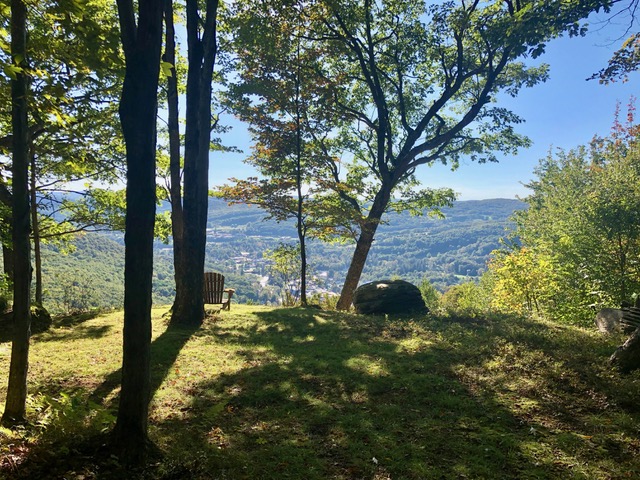
Parallel to their clinical careers, Drs. Jefferys and Maneates were developing a 400-acre property in the Catskills. Over many years, they cleared wooded trails, restored existing structures, expanded and stocked a private lake, renovated stables, and cultivated gardens. What began as a long-term land stewardship project gradually intersected with their clinical work.
As colleagues, friends, and clients visited the property, a consistent observation emerged. Men who were typically guarded in traditional clinical settings often demonstrated reduced defensiveness in the natural environment. Conversations deepened. Emotional access increased. The combination of privacy, space, and structure appeared to lower resistance in ways that standard office environments did not.
This was not viewed as a replacement for clinical rigor. Rather, it suggested that environment could serve as a powerful complement to it. Over time, the integration of land-based and experiential elements became a deliberate part of the treatment design rather than an incidental feature.
Rippling Waters evolved deliberately. Before formally opening its doors, the founders invested significant time refining both the physical environment and the clinical framework.
The main residence was redesigned to provide a structured residential setting that balances comfort with accountability. Dedicated clinical and group spaces were constructed to ensure confidentiality and cohesion. Regulatory compliance systems, documentation standards, and medical oversight protocols were established to meet state requirements while preserving the integrity of the program’s philosophy.
Simultaneously, the clinical model was refined to integrate evidence-based addiction treatment, trauma-informed therapy, emotional regulation work, belief system examination, family reconstruction processes, and structured aftercare planning. Each component was selected intentionally, not added for appearance or trend.
By the time Rippling Waters opened, it was not an evolving concept but a fully realized residential program grounded in years of preparation.
Rippling Waters remains directly overseen by its founders. It is not part of a corporate network or an investor-driven expansion model. Admissions decisions, program development, and clinical standards are guided by the same clinicians who conceived the program.
The decision to build Rippling Waters was not driven by market demand alone. It was driven by a conviction that men required a treatment environment capable of addressing both behavior and belief, both symptom and identity.
The program was built on the premise that when men are given structure, privacy, clinical depth, and clear expectations, meaningful change becomes possible. It assumes capability rather than fragility and emphasizes responsibility without equating it with shame.
Rippling Waters exists because its founders believed that stabilization was not enough. Sustainable transformation required something more deliberate.
Rippling Waters is a private-pay residential program serving men primarily from the Northeast, with national admissions available. Our admissions process is confidential, structured, and direct.