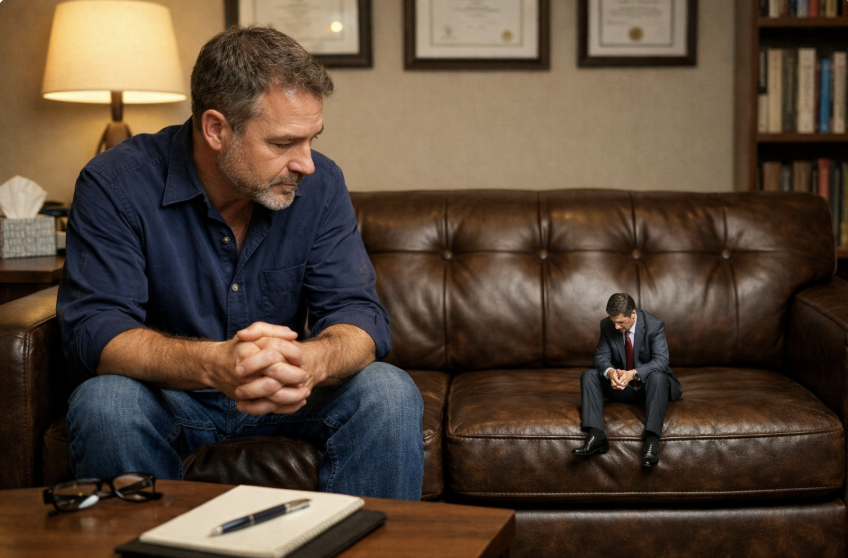

I’m a psychologist trained in depth psychology, with a background in marriage and family therapy and mental health counseling. Over the years, I’ve sat with men who already know what they need to do: tell the truth, face the pain, set the boundary, stop running. For men, insight into this isn’t the problem. The problem is action. What stops them isn’t ignorance. It could be things like anger, guilt, some shame, and the quiet fear of what happens after the choice is made. I’ve come to think of this pattern as what I call the Shakespeare Complex.
In Shakespeare’s plays, the audience usually knows what must be done long before the final act arrives. The tension in the story isn’t what the protagonist should do; it’s whether he has the courage, clarity, or inner freedom to do it. The drama lives in the delay between awareness and action. Men today live in that same space.
Men are not so much confused as they are conflicted. They know what is required of them, but are held back by unexamined beliefs—about responsibility, misplaced loyalties, masculinity, failure, and the cost of choosing themselves. Anger often masks sadness. Guilt disguises fear. Shame convinces them that movement itself is dangerous. And anything that even hints at shame is usually on their do-not-examine list. So they distract, minimize, work harder, drink more, stay busy, mislead themselves, or just go silent. What appears as endurance is often just disconnection over time.
In contemporary American culture, men are often encouraged to develop insight and understanding but are rarely supported in facing what that understanding demands. Awareness without movement becomes its own form of suffering. Over time, that suffering can harden into resignation, resentment, self-defeating behaviors, or desperation. For some, indifference follows right behind desperation. And what begins as hesitation quietly becomes a way of life. This is not a failure of character. It is a failure of awareness, the kind that comes from never fully excavating the causes, beliefs, loyalties, and fears shaping a man’s choices.
Much of the work I do involves helping men recognize that behavior is rarely the starting point. Behavior is an expression, often a compensation for something deeper. Beliefs are the scaffolding for their behaviors. Beliefs formed early in life continue to shape behavior long after their original purpose has passed. Until those beliefs are examined, change remains temporary or elusive.
My aim is not to tell men what to do, but to throw light on what gets in the way when they already know what is needed to do. To look honestly at the moment of hesitation, the beliefs that sustain it, and the quiet forces that keep men frozen at thresholds they are meant to cross. Could it be that staying with what we’d rather avoid is where something finally begins?